
One central console that turns every radar, camera and sensor into a single, manageable security picture.
The alert management platform is the hub of the perimeter security system. When an intruder enters an alarm zone, the radar reports the intrusion location through active detection, the AI vision confirms what the target is, and the intrusion is recorded and logged — so the perimeter is watched in depth rather than by a single sensor.
It manages a mixed fleet in one place: perimeter and area security radar, radar-camera integrated terminals, smart AI boxes with PTZ and bullet cameras, and the alarm panels and CCTV a site already runs.
A real-time command and control system to manage all the security units in the network, to actively alert for intrusion incidents and to access history events.
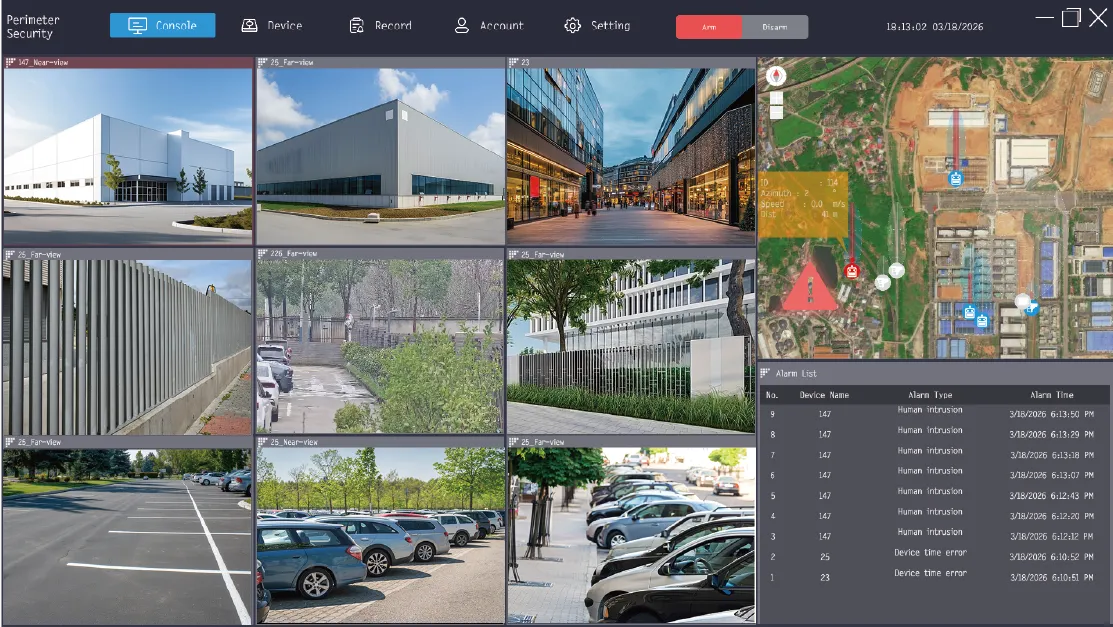
Real-time display of all the surveillance terminals integrated in the system directly in the map, as well as active alarms whenever an intrusion is detected. Live video streams are displayed in rolls automatically.
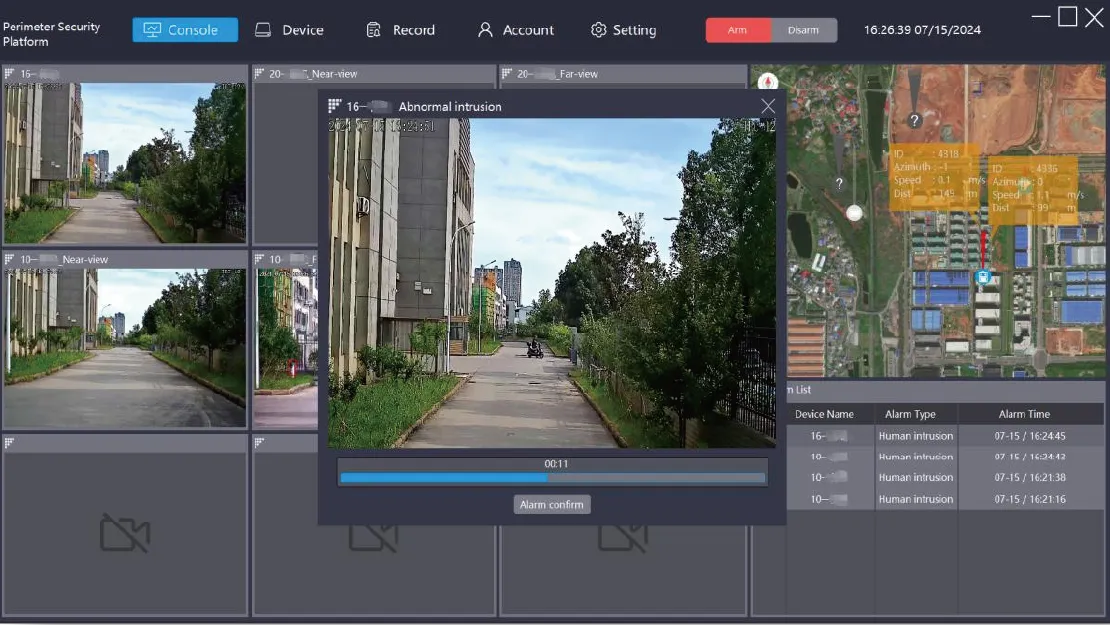
Whenever an intrusion is detected, the coresponding video stream will be automatically brought to the front. The terminal that detected the intruder will be highlighted in the map. The user can double click the records to replay the intrusion video clip.
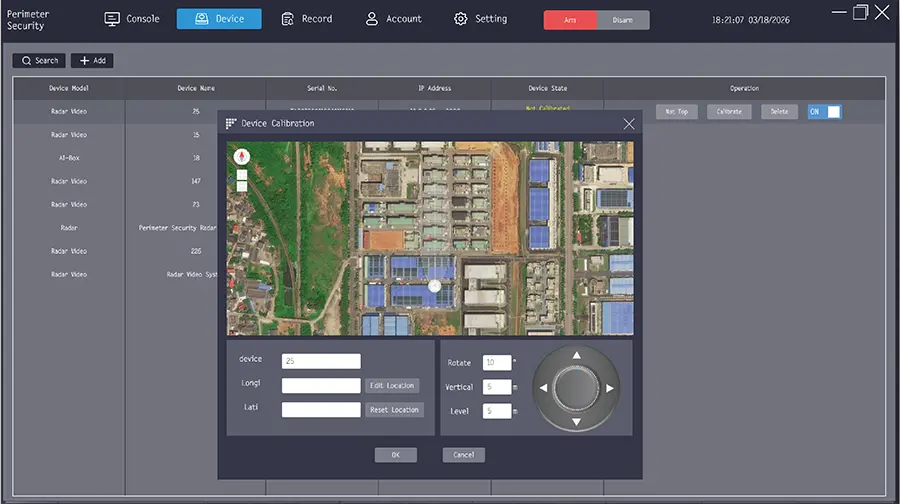
The user can manage the devices in the system, to set up device parameters, and to adjust the direction of the device displayed in the map so that it is in accordance with the actual installation and the intrusion tracks can be accurately overlapped in the map.
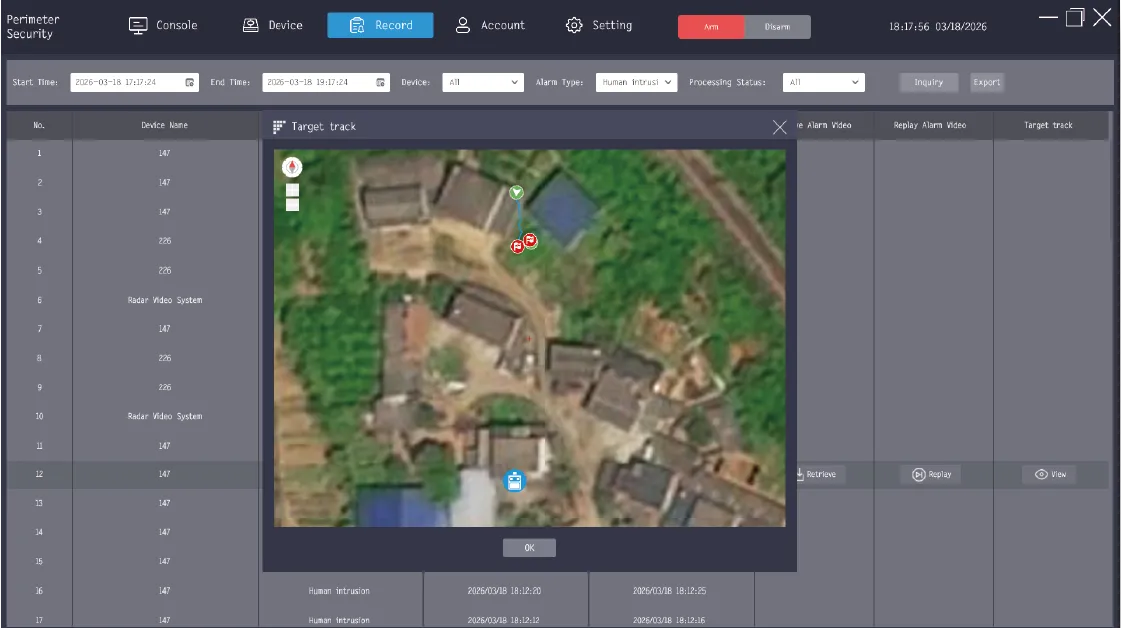
The user can search history operations and intrusion alarms, with video recording of the intrusion events as well as tracks that are directly overlapped in the map.
Three layers make up the system — the terminals that sense, the network that carries the alarm, and the service centre where an operator acts. Hover or tap a layer to see what it does.
The field layer, where intrusion is first sensed. mmWave radar reports the location of a moving target while the camera supplies the visual evidence. The smart AI box runs the fusion and vision algorithms on the edge, so a target is classified before the event is sent upstream.
The network layer carries alarms and video from the field to the service centre. An industrial switch aggregates the terminals, while an alarm signal converter lets a conventional alarm panel take part in the same system, so the site does not have to be rebuilt around it.
The command layer, where the operator works. Radar plots, camera video and alarm events arrive on one map, and the same console links out to a video wall and the site’s control panel so that a response can be directed from a single place.
Everything an operator needs, arranged around one workflow — detect, confirm, act, then keep the record.
Radar plots, camera feeds and alarm states on one map, refreshing as the situation develops.
Radar locates the intrusion and the camera classifies it, so the operator works from a confirmed target rather than a raw alarm.
Draw warning and alarm zones with their own thresholds, so the platform reacts according to how close a target comes.
On an intrusion the matching video is brought to the front and the detecting terminal is highlighted on the map.
Search past alarms and replay the intrusion clip with the radar track overlaid on the map.
ONVIF and RTSP support plus relay and I/O alarm outputs, with an SDK/API for connecting an existing security platform.
A perimeter security system is rarely the first system on a site. The platform is built to sit alongside the cameras, alarm panels and recording that are already in place.
The terminals and AI boxes speak ONVIF and RTSP, so they join a camera estate that is already installed rather than replacing it.
Relay and I/O alarm outputs let the platform drive a conventional alarm control panel, and an alarm signal converter brings the panel back into the same system.
Devices are organised by site, so a control room can watch several locations and drill into any one of them on demand.
Sites where the boundary is long, the ground is open, and a guard cannot be everywhere at once.
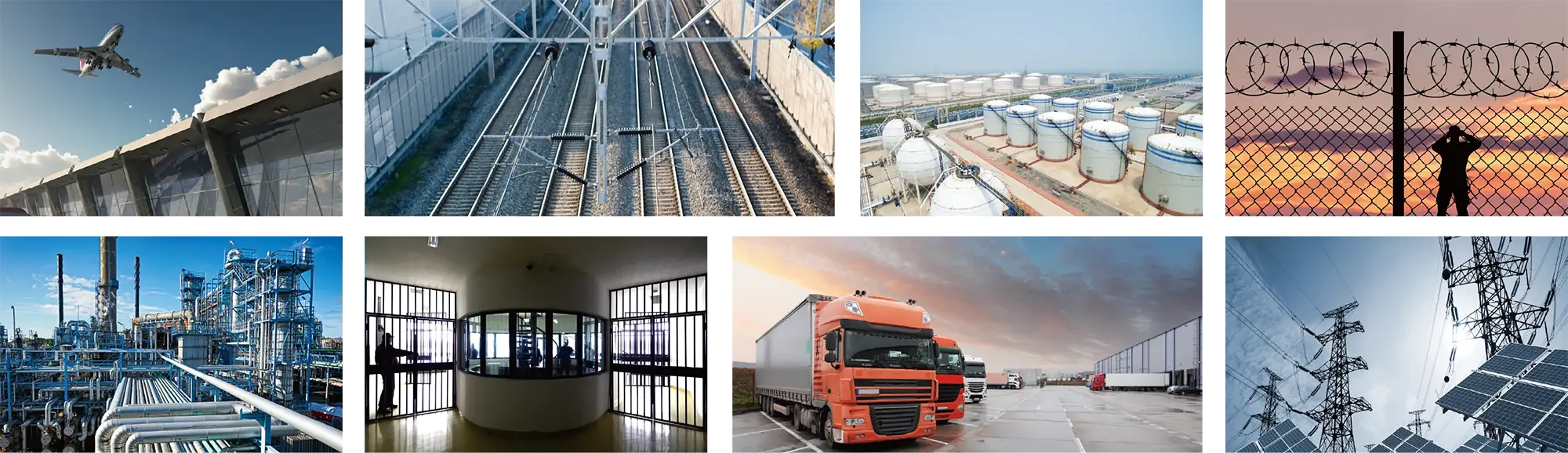
Airside boundaries, runway approaches and service roads, where an unauthorised crossing has immediate safety consequences.
Long, open rights-of-way where trackside intrusion has to be spotted before it reaches the line.
Storage and processing areas where a perimeter breach carries risk well beyond the fence.
Remote, unmanned sites that need continuous watch without a permanent guard.
Loading areas and container yards, where movement is constant and the boundary is wide.
Large process sites where detection has to work across mixed terrain and structures.
Multi-building sites that need one security picture across several boundaries.
Water, power and communications assets where both intrusion and vandalism matter.
Tell us how many sites and devices you need to manage, and we will walk you through the platform deployment.